
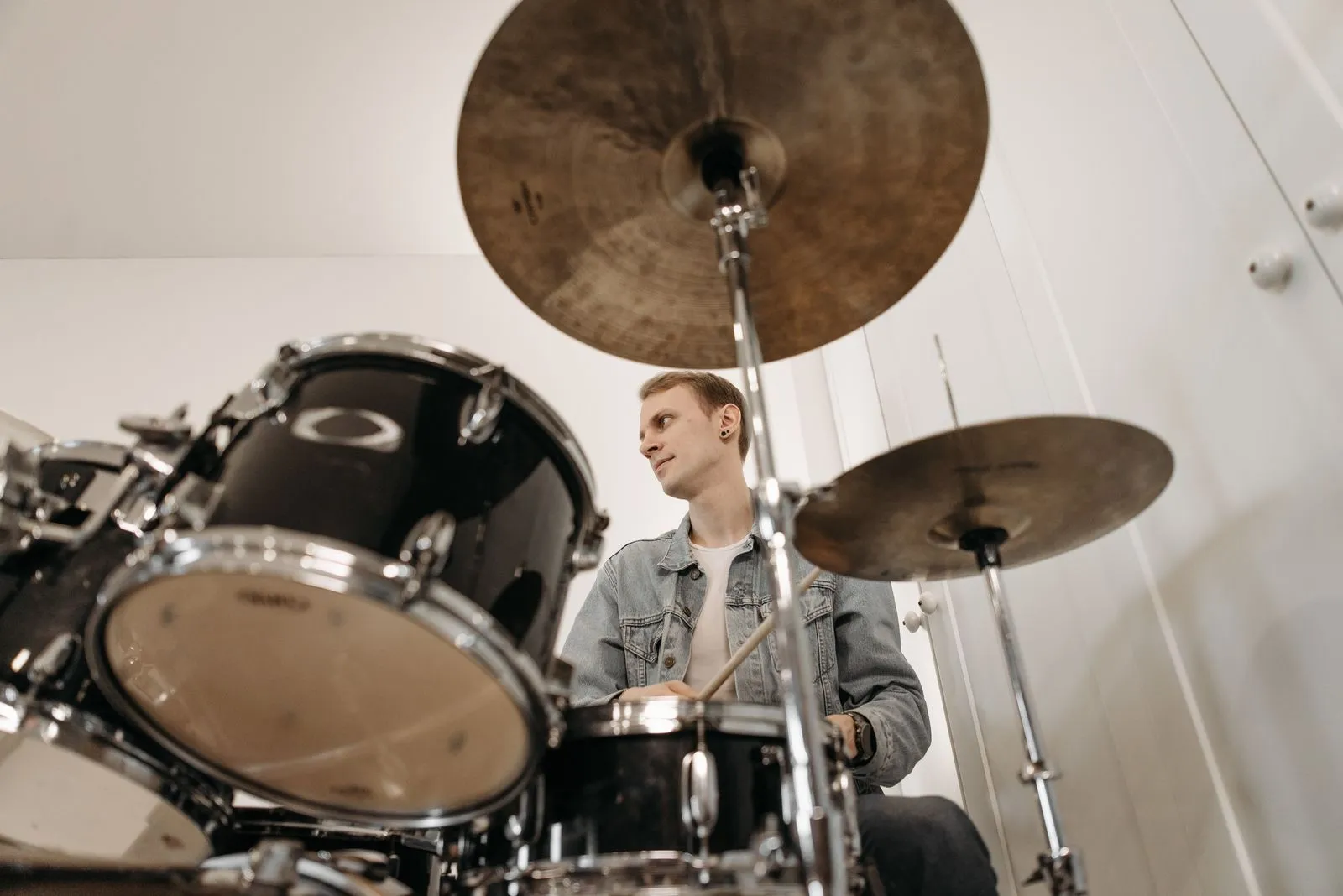
Choosing a first drum kit starts with more than picking a finish or brand. Think about where you’ll play, how much sound your household and neighbors can handle, and the music you want to learn. Acoustic, electronic, and compact kits each suit different needs. You’ll also need dependable hardware, including a drum throne and pedals. Use these practical comparisons to narrow your options and choose a setup you can play comfortably and maintain.
Compare Kit Types
An acoustic kit gives you the natural feel and sound of drums and cymbals. It works well for rehearsals, live playing, and learning how an instrument responds to touch. The tradeoff is volume: even careful practice can carry through a home. Acoustic kits also need space for the drums, cymbals, stands, and a comfortable playing position.
An electronic kit lets you practice through headphones and often offers built-in sounds and metronome features. Check that the pads feel comfortable and that the module has the sounds and connections you need. Compact or low-volume acoustic kits can be a middle ground, but confirm what is included: some require separate low-volume cymbals or mesh heads to reduce sound.
Choose for Your Space
Measure the area where the kit will sit, including room for your stool and space to move your arms and legs. A full acoustic kit needs room around the cymbal stands and bass drum pedal, while some electronic kits fold or fit into a smaller footprint. Leave enough clearance to reach the controls and safely get in and out of the playing position.
Consider sound transmission as well as room size. Rugs can help keep a kit from sliding, but they do not make loud drumming quiet for people in nearby rooms or apartments. Ask household members or neighbors about acceptable practice times. For electronic kits, check whether the kick pedal thump travels through the floor; a suitable practice platform may help reduce vibration.
Check Hardware and Fit
Plan for the essentials: a stable drum throne, bass drum pedal, hi-hat stand and cymbal stands. Many kits include some hardware, but packages differ. Read the list carefully so you know whether the throne, pedals, cymbals, sticks, and drumheads are included. A secure setup matters more than extra accessories you may not use.
Try the throne and pedals if possible. Your feet should reach the pedals comfortably, and the seat should let you sit upright without straining. Make sure stands adjust to your height and hold their position. If you buy used, inspect moving parts, clamps, hinges, and leg braces for looseness or damage, and test the hardware before committing.
Match the Kit to Your Goals
Your musical interests can guide the setup. If you want to play with a band, an acoustic kit may be a better fit when rehearsal space and volume allow. For quiet home practice, an electronic kit with headphone output may make regular playing easier. If you are still exploring styles, choose a versatile setup that includes the basic drums and hardware rather than paying for specialized extras.
Set a complete-kit budget, not just a drum-shell budget. Include hardware, cymbals, sticks, a throne, and any sound-control needs. Ask what can be upgraded later and what should be comfortable from day one. At Elm City Drums in New Haven, you can compare kit types and check which essentials come with a package before choosing.
The right first kit is one that fits your room, supports the music you want to play, and feels comfortable enough to practice consistently. Compare the full setup, including hardware and sound needs, before deciding. Visit a local drum shop to try options and ask which components are included.